

The portfolio heat problem in crypto.
There's a mistake traders make that is surprisingly easy to overlook.
They open a LONG position on Ethereum, another on Solana, perhaps one on Avalanche, and then add a couple of promising altcoin setups.
Each trade looks reasonable on its own.
The entries make sense. The stop losses are defined. Position sizes don't seem excessive.
Five separate opportunities, five separate charts, five separate decisions.
Then Bitcoin suddenly falls.
All five positions turn red.
Within minutes, what looked like a diversified collection of carefully selected trades begins behaving like one enormous bet.
Welcome to the problem of portfolio heat.
Different coins don't necessarily mean different risks
Diversification is a useful concept, but it becomes less effective when the assets being traded respond to the same underlying influences.
Cryptocurrency markets frequently experience periods of strong correlation.
Bitcoin moves sharply, and major altcoins follow.
A sudden change in risk appetite affects numerous sectors simultaneously.
An unexpected macroeconomic development produces selling pressure across assets that previously appeared unrelated.
This doesn't mean all cryptocurrencies move identically.
They don't.
But a trader holding five different altcoins may still have substantial exposure to one common risk: the direction of the broader crypto market.
Owning different tickers is not the same as holding genuinely independent positions.
The mathematics of portfolio heat
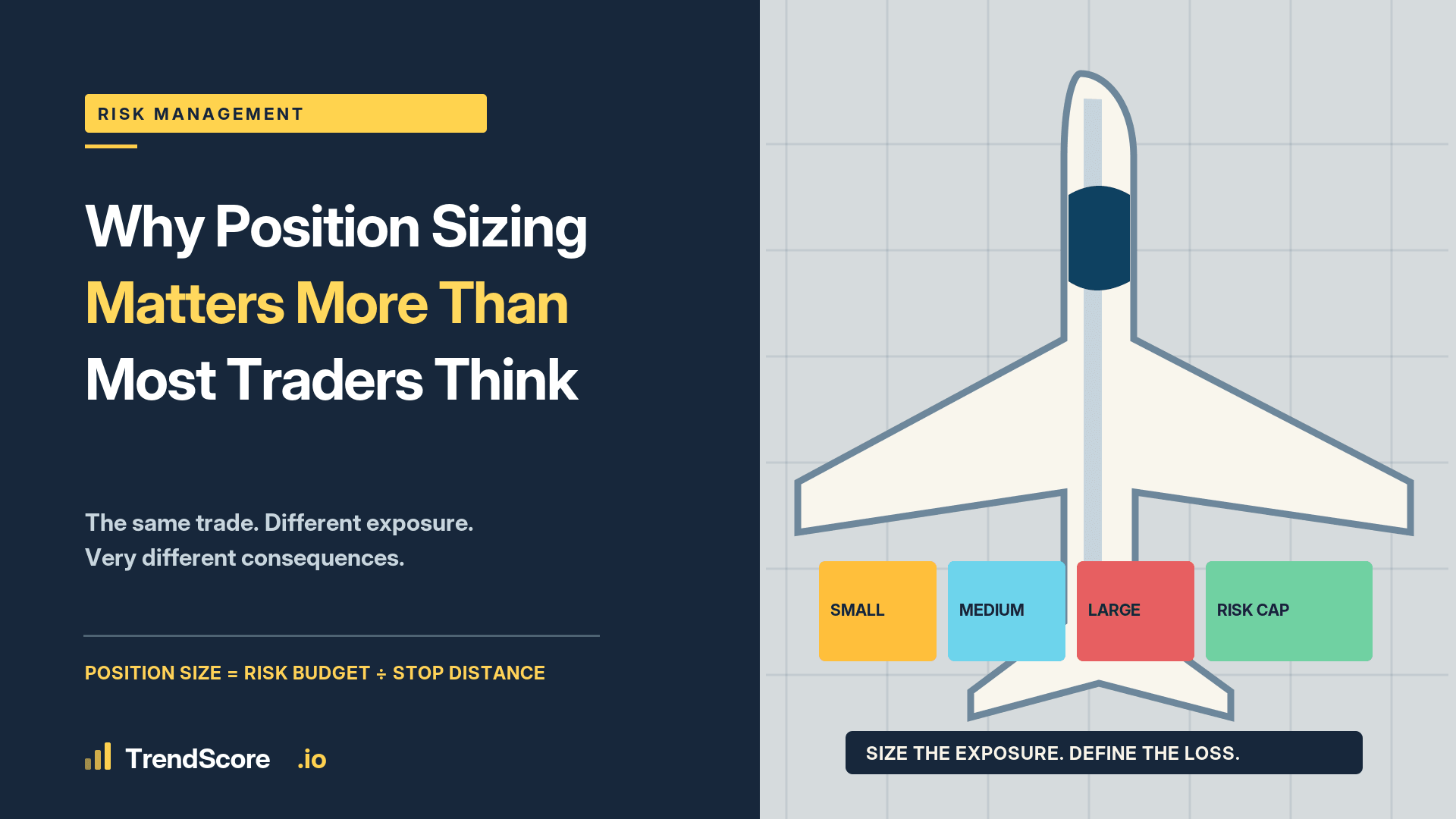
Portfolio heat is a way of describing how much account capital could be lost if multiple open positions reach their planned stops.
Imagine a trading account containing $5,000.
The trader opens five positions, each with $1,000 of market exposure and a stop loss approximately 4% away.
For each position, the planned loss is $40 before fees and slippage.
Individually, that represents just 0.8% of the account.
Nothing looks especially aggressive.
But if all five stops are triggered, the combined planned loss is $200.
That's 4% of the entire account.
The portfolio risk is substantially larger than the risk displayed by any individual trade.
Now add leverage, potential slippage and the possibility of a sudden market-wide liquidation event.
The situation can become considerably less comfortable than the original individual trade calculations suggested.
The lesson is not that five positions are automatically too many.
It is that the trader must understand the combined exposure before deciding whether the positions are acceptable together.
Correlation changes when it matters most
There's another complication.
Two cryptocurrencies might show relatively modest correlation during quiet conditions.
One could be rising while the other moves sideways.
That creates the impression that their risks are largely independent.
But during a significant market decline, both may begin falling together.
This phenomenon is particularly important when evaluating diversification.
Historical correlations aren't permanent. They change with the market environment, and relationships observed during stable periods may not hold during periods of stress.
In practical terms, diversification that appears useful on an ordinary Tuesday may become much less effective during a sudden market-wide selloff.
A portfolio should therefore be examined not only under normal conditions, but also under plausible adverse scenarios.
Watch the underlying exposure
Consider another example.
A trader holds LONG positions in three different cryptocurrencies.
All three have strong technical setups.
But each depends heavily on Bitcoin maintaining its current support level.
The individual charts might look attractive, yet the trades share an important condition for success.
If that condition fails, all three could deteriorate simultaneously.
This is sometimes more important than the exact correlation coefficient calculated from historical returns.
Ask what could cause several trades to fail together.
Would a sudden Bitcoin decline affect all of them?
Would reduced liquidity across altcoin markets create similar problems?
Are the positions all concentrated in highly speculative assets?
Understanding the shared source of risk can be more useful than simply counting the number of holdings.
A simple rule before adding another position
Before opening a new trade, examine what is already in the portfolio.
If the existing positions were all stopped out, what would the combined planned loss be?
Does the new position increase exposure to an existing market direction?
Does it offer meaningful diversification, or does it simply add another version of the same underlying bet?
And if the entire market moved sharply against the portfolio, would the account remain within acceptable risk limits?
One practical method is to establish a maximum portfolio risk budget.
For example, a hypothetical trader might choose to limit aggregate planned losses across open positions to 3% of account equity.
That percentage is an illustration, not a universal recommendation. The appropriate limit depends on the strategy, experience, financial circumstances and tolerance for loss.
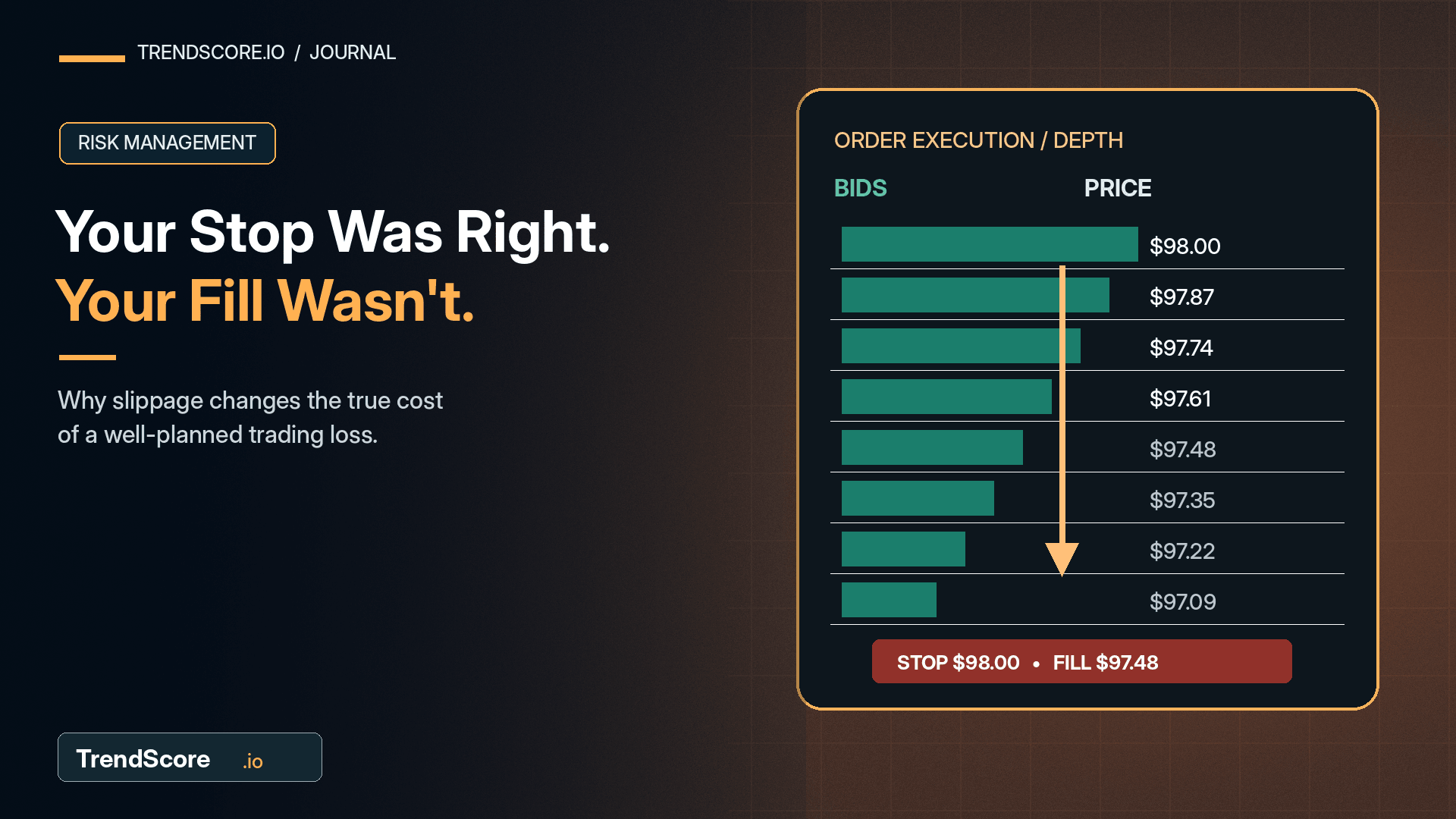
It also needs a buffer for situations where stop orders execute at worse prices than planned.
The central idea is to evaluate risk at the portfolio level rather than treating every position as an isolated decision.
What about holding both LONG and SHORT positions?
Opposing positions can sometimes reduce market exposure.
But they don't automatically eliminate risk.
A LONG on Ethereum and a SHORT on a smaller altcoin may react differently to market conditions.
The positions can have different volatility, liquidity, financing costs and sensitivity to Bitcoin.
Even a strategy designed to be market-neutral can experience losses when the relationship between its components changes.
A hedge should therefore be evaluated based on how the positions actually behave together, not simply because one is labeled LONG and the other SHORT.
A scanner can find opportunities. You still need a portfolio plan.
At TrendScore, scanning multiple cryptocurrencies helps users discover and compare potential market scenarios.
But there is an important distinction between finding several attractive setups and deciding that all of them should be traded simultaneously.
Five high-ranking opportunities may be individually interesting.
That doesn't mean combining them produces a well-balanced portfolio.
Risk management must consider the interaction between positions as well as the quality of each separate setup.
This is particularly relevant when several candidates are moving in response to the same broader market conditions.
One question worth asking every day
If every open trade moved against you at the same time, how much could you lose?
It's not an especially exciting question.
It won't identify the next breakout or predict tomorrow's Bitcoin price.
But it can expose a weakness that individual trade analysis frequently misses.
The danger isn't always taking one enormous position. Sometimes it's building one enormous position without realizing it—one seemingly reasonable trade at a time.